

11 Best Kitchen Lighting Ideas
- davron22
- Jun 28
- 6 min read
A kitchen can look smart on paper and still feel awkward to use once the lights go on. Worktops end up in shadow, the dining area feels flat, and one bright fitting in the middle of the ceiling does all the heavy lifting badly. The best kitchen lighting ideas solve that by treating the room as a working space first, then making it feel warm and comfortable once the practical side is covered.
If you are planning a full refit, you have more freedom. If you are keeping the existing kitchen and just want a better result, there is still plenty you can do. In most homes, the best approach is not one fancy fitting. It is a simple mix of lighting types placed where they are actually needed.
What makes the best kitchen lighting ideas work
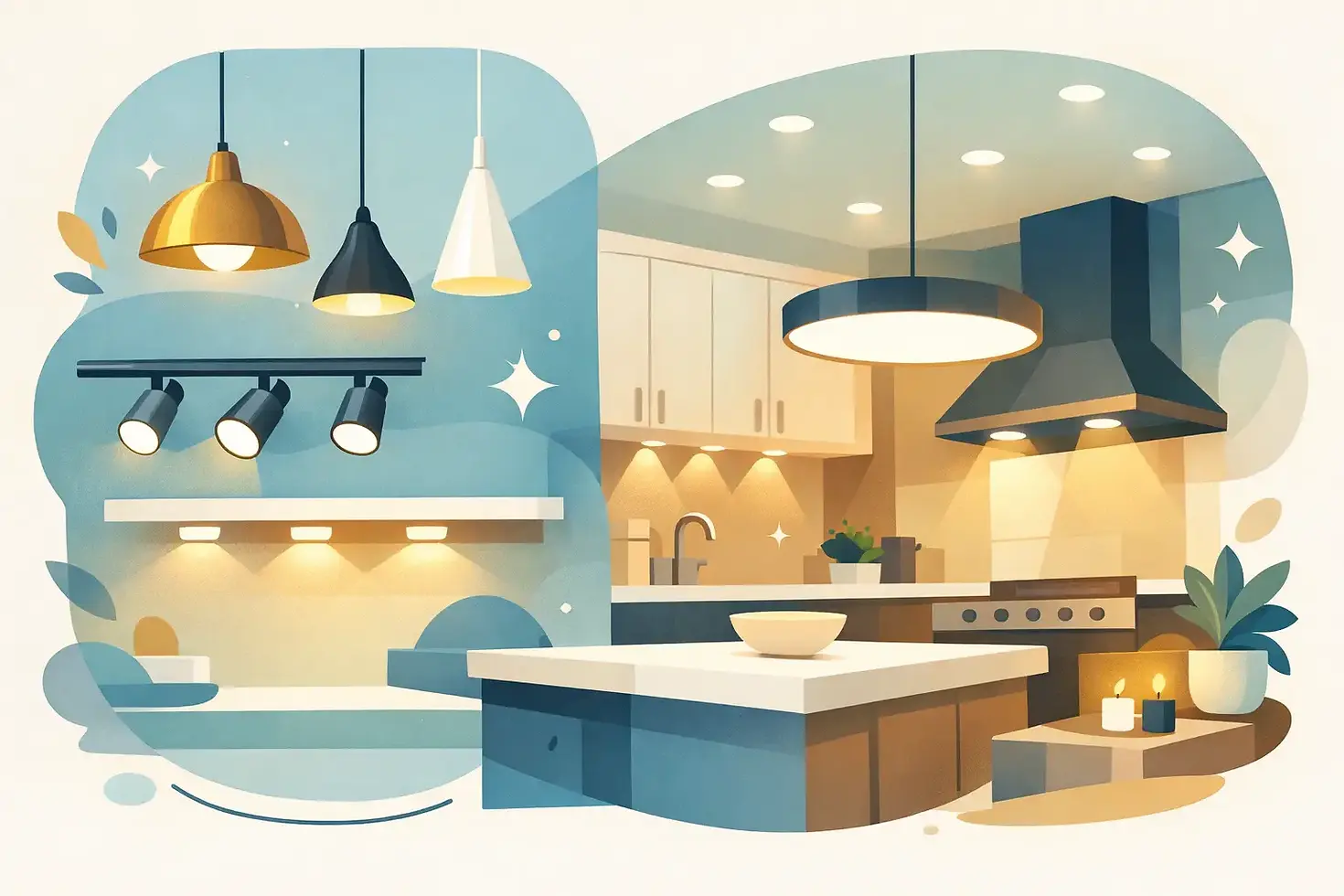
Good kitchen lighting usually comes down to layers. You need general light for the whole room, task light for prep and cooking, and softer light for the times when the kitchen is being used for more than making dinner.
That matters because kitchens are no longer one-purpose rooms. They are where people cook, eat, work on a laptop, help with homework and stand chatting with a cup of tea. A lighting setup that works brilliantly for chopping vegetables might feel too harsh at 9pm. On the other hand, soft mood lighting on its own is no use when you are trying to see whether chicken is properly cooked.
This is where a lot of homeowners get frustrated. They spend money on new units, tiles and worktops, but the room still does not feel right. Quite often, the issue is lighting layout rather than the kitchen itself.
Start with proper ceiling lighting
For most kitchens, ceiling lighting is the base layer. Recessed downlights are a popular choice because they give a clean look and spread light evenly when positioned properly. They suit modern kitchens well, but they also work in more traditional spaces if you want the fittings to stay discreet.
The key point is spacing. Too few downlights and you get gloomy patches. Too many and the room can feel clinical. It also depends on ceiling height, room shape and where the units sit. A galley kitchen needs a different arrangement from an open-plan kitchen with an island.
Flush or semi-flush ceiling fittings can also work well, especially in smaller kitchens or homes with lower ceilings. They are often more budget-friendly and can give a softer overall feel than a grid of bright spots. If the kitchen is modest in size, one well-chosen central fitting supported by under-cabinet lights can be enough.
Use under-cabinet lighting where it actually helps
If there is one upgrade that makes an immediate difference, it is under-cabinet lighting. This is one of the best kitchen lighting ideas because it deals with a very common problem - your ceiling light is behind you, so your body casts a shadow over the worktop.
LED strip lighting or slimline fittings under wall units give direct light exactly where you prepare food. It makes chopping, reading labels and cleaning up much easier. It also gives the kitchen a more finished look, especially in the evening.
There are a few options here. Some people want a simple on-off setup, while others prefer dimmable lighting for a softer effect at night. Warm white tends to feel more welcoming, while cool white can look sharper and brighter. Neither is automatically right or wrong. It depends on the style of kitchen and how you use the room.
Pendant lights work best when they have a job to do
Pendant lights can look great above an island, breakfast bar or dining table, but they work best when they are doing more than filling space. In practical terms, they help define a part of the room and bring light down to where people are sitting or working.
Over an island, pendants can add focus and character. Over a table, they make the area feel more settled and less like an extension of the cooking zone. The main thing is scale. Small pendants over a large island can look lost, while oversized fittings in a compact kitchen quickly become a nuisance.
Height matters too. Hang them too high and they lose impact. Too low and they get in the way of sightlines across the room. If you are planning statement pendants, it is worth getting the positioning right before any wiring is finalised.
Add lighting inside cabinets and shelving
This is not essential in every kitchen, but it can be a smart extra. Lighting inside glazed cabinets, open shelves or pantry units helps create depth and stops the room feeling one-dimensional. It is especially effective in larger kitchens where you want a few softer points of light after dark.
For homeowners, this is mostly about appearance and convenience. For landlords or anyone updating a rental property, it is probably lower priority than getting the main and task lighting right. That is the trade-off. Decorative lighting is worthwhile once the practical side is sorted, but it should not eat into the budget needed for the basics.
Consider plinth lighting for a softer evening look
Plinth lighting fitted at the base of kitchen units is another feature that is more about atmosphere than essential function, but it can be very effective. It gives a gentle glow at floor level and works well in modern kitchens, particularly in open-plan spaces.
It is also useful as low-level lighting if you do not want the main kitchen lights blazing late at night. If someone is coming down for a drink of water or making a bottle, plinth lights can be enough without fully waking the house.
That said, it is not for everyone. In a simple, practical kitchen, the money may be better spent on better ceiling placement, under-cabinet lights or dimmers.
Dimmers make a bigger difference than people expect
One of the best kitchen lighting ideas is also one of the simplest. Dimmers give you flexibility. A kitchen that needs bright light for cooking and cleaning can shift to a softer level when you are eating or winding down.
This is particularly useful in open-plan kitchens where the room blends into a dining or living area. Bright, fixed lighting can make the whole space feel stark at night. With dimmable circuits, the same fittings become much more adaptable.
Not every fitting or lamp is dimmable, so this needs to be planned properly. It is a small detail, but it makes a real difference to how usable the room feels across the day.
Choose the right colour temperature
People often focus on the fitting and forget about the type of light it gives off. Colour temperature changes the feel of a kitchen more than many expect. A very cool white can make surfaces look crisp and bright, but it may also feel a bit harsh in a family kitchen. A warm white feels more relaxed, though if it is too warm it can make a workspace feel dull.
A neutral to warm white often suits kitchens best because it keeps the room practical without making it feel clinical. There is no universal answer though. Gloss units, darker worktops, natural daylight and wall colours all affect the result.
If possible, it helps to think about the kitchen as a whole rather than picking lamps in isolation.
Light the dining area separately if your kitchen includes one
In many homes, the kitchen includes a table or small dining space. That area usually benefits from its own lighting rather than relying fully on the kitchen ceiling lights. A pendant, feature fitting or separate dimmable circuit helps the space feel intentional.
This matters most in open-plan layouts. Without it, the dining area can feel like it is floating in the middle of the working part of the kitchen. Separate lighting gives each part of the room its own purpose and makes the whole space feel better thought through.
Do not ignore natural light
The best kitchen lighting ideas are not only about fittings and switches. Daylight should shape the plan too. A kitchen with good natural light during the day may not need the same level of overhead brightness as a darker rear extension or north-facing room.
Window position, door glazing and even the finish of cabinets will affect how light moves around the space. A dark kitchen can often be improved with a better artificial lighting layout, but lighter surfaces and sensible placement help just as much.
Plan the wiring around how you actually use the kitchen
This is where practical electrical advice matters. It is one thing to choose nice fittings. It is another to have them switched sensibly, grouped properly and installed safely. If the under-cabinet lights, island pendants and ceiling lights all run off one switch, the room will be less flexible than it should be.
Think about your normal routine. Do you want one switch for everyday task lighting and another for softer evening use? Do you need outside visibility from the kitchen doors? Are you updating an older property where the existing wiring limits what can be done without extra work?
These are the details that shape the final result. For homeowners in Glasgow and surrounding areas, this is often where a straightforward chat with a local electrician helps turn rough ideas into a setup that suits the property and budget.
A good kitchen should be easy to use, easy to live in and comfortable at every hour, and the lighting has a lot to do with that. Get the practical parts right first, then add the finishing touches that make the room feel like home.


Comments