

How to Choose EV Charger for Your Home
- davron22
- Jun 8
- 6 min read
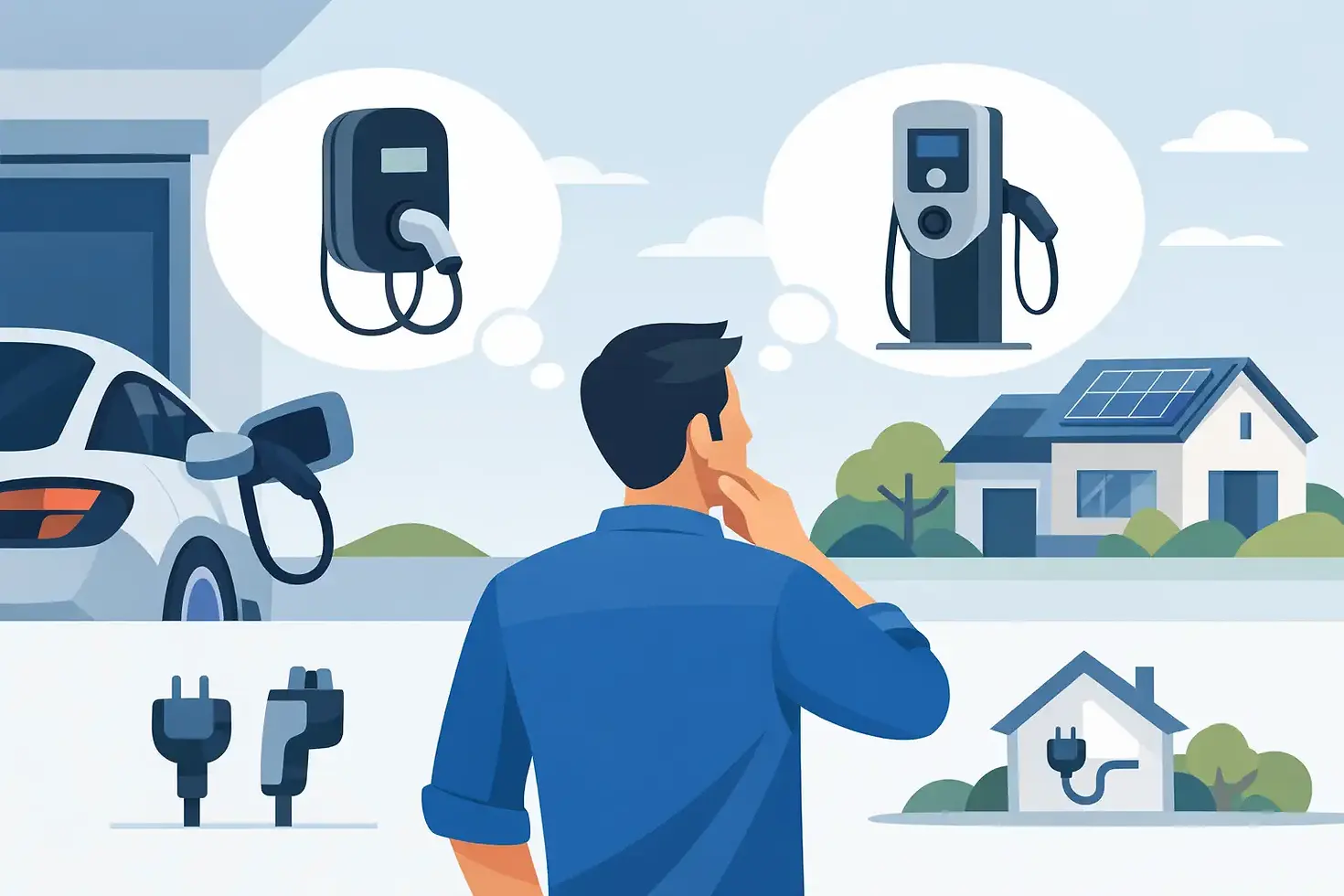
The wrong EV charger usually looks fine on the wall and still leaves you annoyed a week later. Maybe the cable is too short, the app is clunky, or the unit charges more slowly than you expected. If you're wondering how to choose EV charger options for your home, the best starting point is not the brand name. It is how you actually park, charge and use your car day to day.
For most households, choosing a charger is really about matching the unit to the car, the property and the way the home uses electricity. A good installer will talk through all three. That matters because the best charger for one house in Glasgow might be a poor fit for another, even if both drivers own electric cars.
How to choose EV charger without overcomplicating it
Most people do not need the most expensive unit on the market. They need one that is safe, reliable and suits their routine. Start with the basics: charging speed, tethered or untethered cable, smart features, and whether your current electrical setup is ready for it.
A standard home charger is usually 7kW, and for most drivers that is the sensible choice. It is much quicker than a three-pin plug and generally more than enough for overnight charging. If you plug in during the evening and unplug in the morning, a 7kW charger will suit the vast majority of homes and vehicles.
There are faster options, but they are not always practical or necessary at home. Higher-powered chargers may need a different supply arrangement, and many domestic properties simply are not set up for that. This is one of those areas where more is not always better.
Start with your car and driving habits
Before looking at charger styles or apps, think about your car battery size and how many miles you usually cover. If you only do short local journeys and charge overnight, you may never need anything beyond a straightforward 7kW smart charger. If you regularly run the battery low and need to top up quickly between trips, your priorities may be slightly different.
It is also worth checking what charging connection your vehicle uses. Most newer EVs in the UK use Type 2 for home AC charging, but it is still worth confirming. The charger needs to suit the car, and if you have more than one EV in the household now or plan to in the future, flexibility becomes more important.
Think about where the charging port sits on the car as well. Front, side and rear charging ports all affect cable length and charger position. This sounds like a small detail until you are stretching a cable awkwardly across the driveway every night.
Tethered or untethered - which suits your home?
This is one of the biggest practical choices. A tethered charger comes with a cable attached. An untethered charger has a socket, so you plug in your own cable when needed.
A tethered charger is often the easiest option for everyday use. The cable is there, ready to go, and you do not need to lift one in and out of the boot each time. For households charging the same car in the same space most days, this is usually the simpler answer.
An untethered charger can look tidier and gives you more flexibility if you change cars later. Some customers prefer it because the unit is neater on the wall and the cable can be stored away. The trade-off is convenience. If you want a quick plug-in after work in the rain, a tethered lead tends to win.
Smart features - useful or just extra cost?
A lot of modern chargers come with apps, scheduling, usage tracking and tariff integration. Some of these features are genuinely useful. Others sound better in the sales pitch than they do in real life.
The most useful smart feature for many homes is scheduled charging. That allows you to charge during off-peak hours if your electricity tariff offers cheaper rates overnight. Over time, that can make a real difference to running costs. Load management can also be helpful, especially in homes where electric showers, cookers or other high-demand appliances are in regular use.
App control can be handy, but only if it works well. If an app is unreliable or awkward to set up, it quickly becomes a nuisance. A dependable charger with simple controls is often better than a feature-packed one that causes bother.
Check your home's electrical setup
This is the bit many people do not think about until installation day. Your charger does not just need a spot on the wall. It also needs a suitable circuit, proper protection and enough capacity in the existing installation.
Your consumer unit may need checking first, and in some homes it may need upgrading. Earthing arrangements, cable routes and overall load on the property all matter. None of this means you cannot have a charger installed. It simply means the installer should assess the setup properly before recommending a unit.
If you live in an older property, this check is especially important. The charger itself may be straightforward, but the condition of the existing electrics can affect the job. A good electrician will explain this in plain language and let you know if any additional work is needed before installation can go ahead safely.
Think carefully about charger location
Where the charger goes can be just as important as which one you buy. The best position is usually the one that gives easy access to the car without creating a trip hazard or awkward cable run.
Sometimes the neatest-looking place is not the most practical. If the charger ends up too far from where the car is normally parked, daily use becomes a hassle. If the cable crosses a path or driveway in an awkward way, that is another issue. You want it to be easy to reach, easy to store and straightforward to use in poor weather.
This is where having an installer visit the property helps. What looks simple in photos often changes once someone sees the wall space, parking layout and distance from the consumer unit.
How to choose EV charger by price and value
Price matters, but the cheapest charger is not always the best value. A lower-cost unit may do the job perfectly well if your needs are simple. On the other hand, paying more for features you will never use rarely makes sense.
The full cost includes the charger, the installation and any extra electrical work required. Longer cable runs, groundwork, consumer unit upgrades or difficult wall routes can all affect the final price. That is why a proper quote matters more than comparing charger prices on their own.
It also helps to ask what is included. Some installations are straightforward supply-and-fit jobs. Others involve customer-supplied chargers. Either can work, provided the unit is suitable and the installer is happy to fit it.
Brand matters, but not as much as support
People often start by asking which charger brand is best. Brand does matter to a point, especially for reliability, warranty and app quality. But the right choice still depends on your setup.
A well-known brand with poor support or an awkward app may be less useful than a simpler unit that works every time. What you want is a charger that is proven, compatible with your car and backed by decent aftercare if anything goes wrong.
For most homeowners and landlords, dependable performance beats flashy extras. If the charger is easy to use, safely installed and suited to the property, that is what counts.
A quick word for landlords
If you are choosing a charger for a rental property, think beyond the current tenant. You want something durable, easy to operate and suitable for future occupiers too. Untethered units can be a sensible option here because they give more flexibility across different vehicles.
You will also want the installation carried out neatly and in line with current standards, especially if the property already needs other electrical work such as smoke alarm wiring, testing or upgrades. Keeping everything compliant and straightforward makes life easier later.
What a good installer should ask you
A proper installer should ask about your car, parking position, fuse board, preferred charger location and how you want to use it. They should also explain any limits or extra work without burying you in jargon.
That conversation is often the difference between a charger that simply exists and one that actually works well for your household. A friendly, practical approach matters. You should come away knowing what you are getting, why it suits the property, and what the installation will involve.
If you are not sure how to choose EV charger options on your own, that is normal. Most people only do this once. A decent electrician will narrow it down quickly and keep it simple.
For homes across Glasgow and surrounding areas, that usually means focusing on safety, sensible charging speed and day-to-day convenience rather than getting distracted by features you may never use. The best choice is the one that fits your home, your car and your routine without making charging a chore.
If you are at the stage of pricing it up, it helps to get advice based on your actual property rather than guessing from online specs. A charger should make owning an EV easier from day one, not give you another job to think about every evening.


Comments