

How to Test Smoke Alarms Properly at Home
A smoke alarm only helps if it works when you need it. Knowing how to test smoke alarms takes less than a minute, but it is one of those small household jobs that is easy to put off. A regular test gives you confidence that the alarm can warn your family, tenants or neighbours if there is a fire.
Most homes now have more than one alarm, often with smoke alarms in hallways and living areas plus a heat alarm in the kitchen. If they are wired together, testing one should normally set them all off. That can be loud, but it is exactly what you want to confirm.
How to test smoke alarms using the test button
Start by letting everyone in the house know you are about to test the alarms. The sound is designed to be attention-grabbing, so move young children away from the alarm if possible and avoid standing directly underneath it.
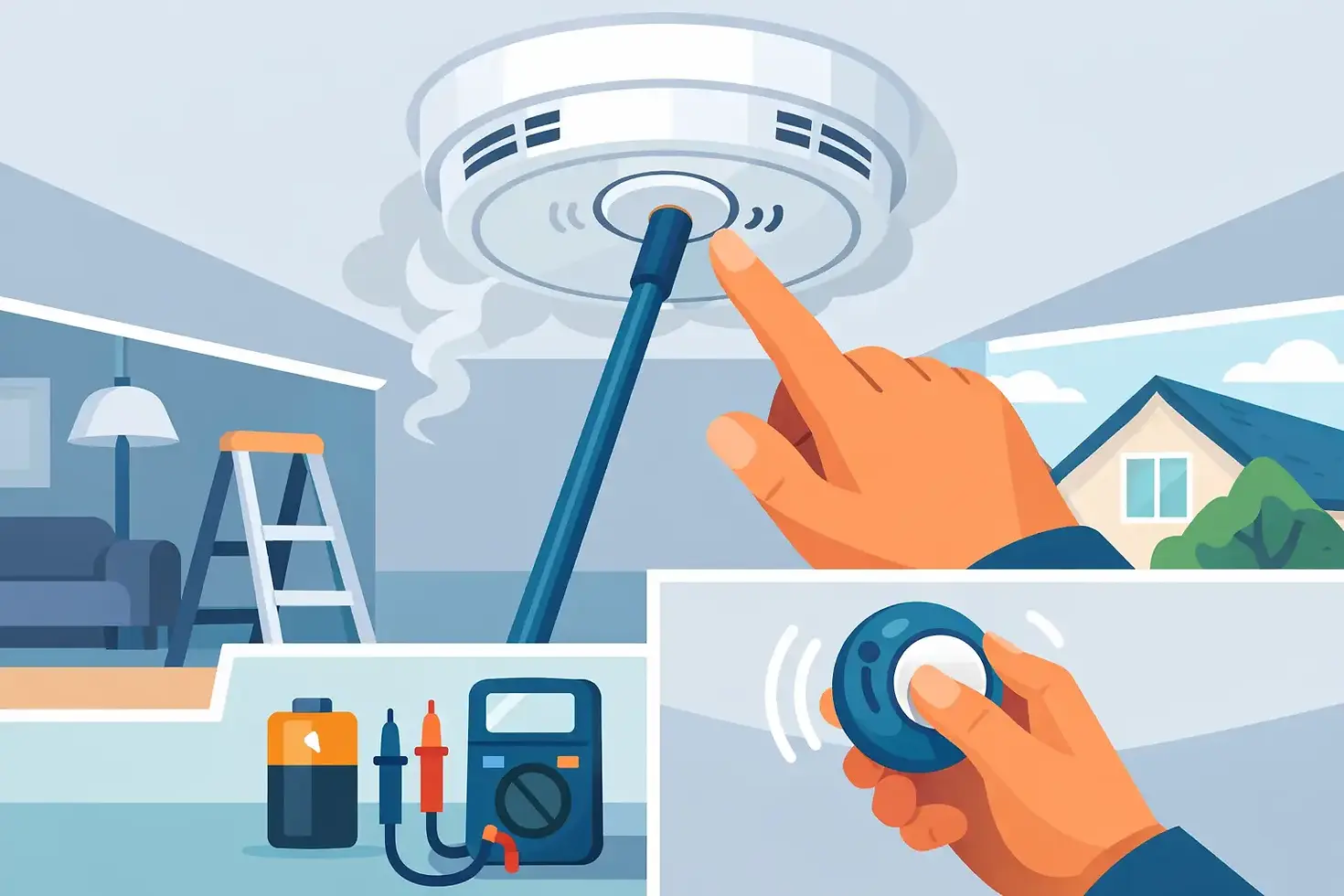
Find the test button on the front or side of the unit. On some models it is clearly marked; on others, the main cover itself is the button. Press and hold it for a few seconds until the alarm sounds. A short delay is normal, particularly with mains-powered or interlinked alarms.
For a battery-operated alarm, a loud, clear alarm usually shows that the battery, sounder and basic electronics are working. For a mains-powered alarm, check that it sounds as expected and that any power indicator light is on. If the alarms are interlinked, listen for every alarm in the property. Do not assume they are connected just because they look similar.
Release the button and wait for the alarms to stop. If an alarm continues sounding, follow the manufacturer's instructions to silence or reset it. Never remove the battery or disconnect wiring simply to stop the noise unless there is an immediate reason to make the alarm safe.
Test every alarm, not just the one nearest the stairs
It is common to test one hallway alarm and forget the heat alarm in the kitchen, the alarm in the loft conversion or the one in a detached garage. Each device needs checked individually, even when they are part of the same system.
A sensible routine is to test them on the same day each week or, at the very least, once a month. Pick a date that is easy to remember, such as the first Sunday of the month. Landlords should also build alarm checks into routine property visits and record the result where appropriate.
While testing, take a quick look at each alarm. Check it is not painted over, blocked by dust, covered by a fitted cap left behind after decorating, or positioned where steam regularly sets it off. An alarm that has been ignored because it gives false alarms is not doing its job properly.
Smoke alarms and heat alarms do different jobs
A smoke alarm detects smoke particles in the air. It is generally used in escape routes such as hallways and landings, as well as suitable living areas. A heat alarm responds to a rapid rise in temperature or a set temperature, making it better suited to kitchens where normal cooking fumes could trigger a smoke alarm.
Do not swap one for the other without advice. A heat alarm in a hallway may not provide an early enough warning, while a smoke alarm directly outside a steamy bathroom or beside a kitchen door may become a nuisance. The right type and location matter as much as pressing the test button.
What a chirp, silence or weak alarm sound means
A brief chirp every minute or so is usually the alarm telling you something needs attention. The most common cause is a low backup battery, but it can also mean the unit has reached the end of its service life, is contaminated with dust, or has developed a fault.
Replace replaceable batteries with the type specified by the manufacturer. Do not fit an old battery from a drawer or mix different battery types. Once replaced, press the test button again to make sure the alarm responds. Some sealed long-life alarms do not have a replaceable battery. When their battery reaches the end of its life, the whole unit must be replaced.
If the test button produces no sound, first check whether the alarm has a battery fitted correctly and whether a mains unit has power. A tripped circuit, a loose connection or a failed alarm can all be the cause. Avoid taking a wired alarm apart yourself if you are not confident working safely around electrical wiring. A qualified electrician can check the supply, connections and interlinking without guesswork.
A weak or muffled sound is also a reason to act. The alarm may be dusty, damaged or simply too old. Gently vacuum around the outside using a soft brush attachment if the manufacturer permits it. Do not spray cleaning products, polish or water onto the unit.
Do not test an alarm with a candle, match or cooking smoke
The test button is the safe everyday method because it checks the alarm's power and sounder. Avoid holding a flame, cigarette, incense stick or burning paper beneath an alarm. Apart from the obvious fire risk, soot and smoke can contaminate the sensor and shorten the unit's life.
Some manufacturers allow a specific smoke detector test aerosol to check the sensing chamber. This is more of a maintenance check than a weekly household test. Only use a product approved for your alarm type and follow its instructions carefully. If you have a wired, interlinked system or are unsure whether an alarm is reacting correctly, it is often better to arrange a professional check.
Check the age of your alarms
Smoke and heat alarms do not last forever. Many are designed for a service life of around ten years, although the label on the unit is the figure to follow. Look for the manufacture date or replacement date printed on the back or side. If the alarm is past its stated replacement date, replace it even if it still beeps during a button test.
This is especially relevant after buying a home. Alarms may look tidy and modern from below but be well beyond their intended lifespan. It is also worth checking that replacement alarms are compatible with the existing wired or wireless interlink system. Mixing incompatible units can leave some alarms working on their own rather than warning the whole property.
For landlords: check the system between tenancies
Private landlords have additional responsibilities for fire detection in rental homes. Requirements can depend on the property type, layout and local rules, but a basic battery alarm arrangement is not always enough. In Scotland, many homes require interlinked smoke and heat alarms, with carbon monoxide detection where there is a fuel-burning appliance.
Test alarms at the start of a tenancy, encourage tenants to test them regularly, and deal with reported faults promptly. If you are upgrading alarms, carrying out an EICR, or dealing with repeated nuisance activation, having the system checked by a qualified electrician can prevent a small issue becoming a safety or compliance problem.
When to call an electrician
Changing a battery and using the test button are straightforward jobs. Call for help when a mains-powered alarm has no power, linked alarms do not all sound, an alarm repeatedly activates without an obvious cause, or the wiring appears loose or damaged. The same applies if you are renovating and need alarms moved, added or brought up to the right standard for the property.
David Ronald Electrical can inspect, replace and wire smoke alarms for homeowners and landlords across Glasgow and nearby areas, with practical advice on the right setup for the home rather than a one-size-fits-all answer.
Make alarm testing part of the household routine, alongside checking the boiler pressure or putting the bins out. One loud minute now is far better than finding out an alarm has failed when there is no time to spare.


Comments