

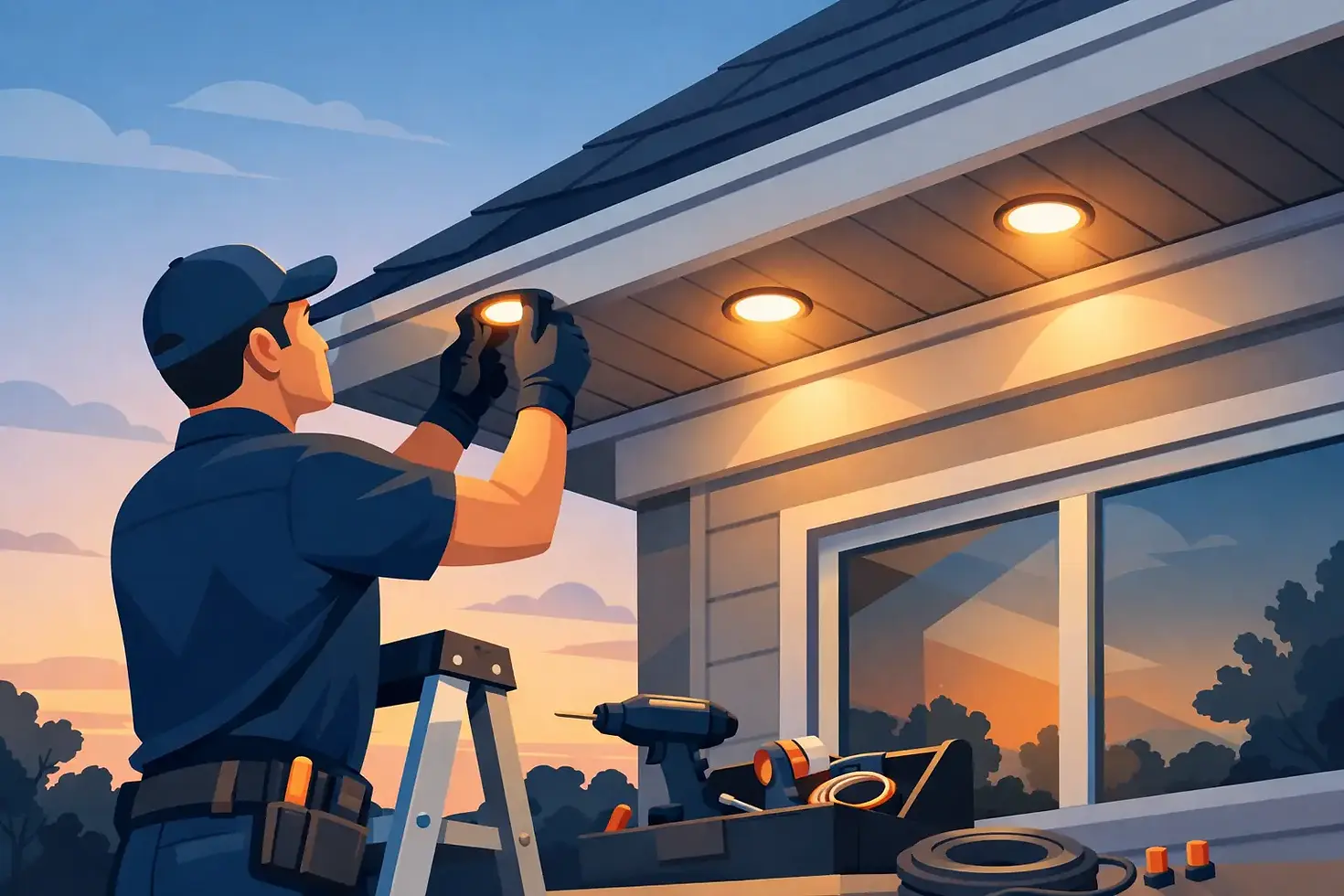
Soffit Lighting Installation Done Properly
- davron22
- Apr 21
- 6 min read
A good soffit lighting installation can make a house look sharper straight away, but it is not just about appearance. Done properly, it gives you safer paths, better visibility around doors and driveways, and a tidy finish that works all year round. Done badly, it can leave you with patchy light, water issues, damaged soffits, or fittings that fail far sooner than they should.
That is why this type of lighting is worth planning properly before any holes are cut. The best results come from choosing the right fittings, spacing them sensibly, and making sure the wiring is installed safely for outdoor use. It sounds simple on the surface, but a neat job depends on getting the small details right.
Why homeowners choose soffit lighting
Soffit lights sit underneath the roof overhang, which makes them a practical way to light the outside of a property without bulky wall fittings. They are discreet during the day and useful at night. For many homeowners, that balance is exactly the point. You improve the look of the house without making it feel overdone.
They are also popular because they suit different types of property. A newer house can benefit from clean, evenly spaced downlights across the front and rear. An older property might use them more selectively above entrances, patio doors, or side paths. There is no single layout that suits every house, and that is where experience matters.
For landlords, soffit lighting can be a sensible upgrade too. It helps improve visibility outside entrances and around the perimeter, which is useful for tenants and visitors, especially during darker months. It is a straightforward improvement that adds function as well as presentation.
What matters before soffit lighting installation starts
Before any soffit lighting installation begins, the first question is usually where the power is coming from. In some homes, there is a straightforward route from an existing lighting circuit. In others, access is more limited, which can affect the amount of work involved. The neatest lighting layout in the world still needs a safe and practical supply.
The condition and type of soffit also matter. Timber, uPVC and other materials all need to be treated a bit differently when cutting in fittings. Some soffits have enough depth for recessed lights, while others may need a shallower fitting or a different approach altogether. You also need to think about what sits above the soffit. Roof edges, insulation, ventilation and access can all affect the job.
Then there is the question of what you want the lighting to do. Some customers want soft feature lighting that gives the front of the house a clean evening look. Others want brighter practical lighting for parking, side access, bins, patios or garden doors. Both are fine, but they need different fittings and spacing.
Choosing the right fittings for the job
The fitting itself makes a bigger difference than many people expect. Small LED downlights are a common choice because they look smart and keep the finish tidy. They are energy efficient, reliable when chosen properly, and available in different colour temperatures. Warm white gives a softer look, while cooler white can feel brighter and more functional.
Brightness needs a bit of judgement. Too dim, and the lights disappear once they are fitted. Too bright, and the house can end up looking harsh or overlit. The aim is usually an even spread of light that feels comfortable rather than glaring. This is especially important at the front of a property, where the lighting should improve visibility without shining straight into windows or across the street.
Outdoor ratings are essential. These fittings are exposed to moisture, cold weather and temperature changes, even under the eaves. Using the right IP-rated lights and suitable connections helps prevent faults later. This is one of those areas where cutting corners often shows up after the first bad spell of weather.
Spacing and layout make the finish
A lot of the final look comes down to spacing. If lights are set too close together, the effect can look fussy. If they are too far apart, you get dark gaps and uneven coverage. The right layout depends on the width of the house, the height of the soffit, the beam angle of the light, and what sits below it.
At the front of a property, customers often want symmetry, and that usually works well. Even spacing across the entrance or frontage gives a clean result. At the rear, the layout can be more practical. You may want stronger coverage over patio doors, seating areas or steps, with less emphasis on perfect visual balance.
It also helps to think about the house from the pavement as well as from underneath the soffit. A fitting might look centred from one angle but feel off once you step back and see the full front elevation. Taking the time to mark out positions properly before installation saves a lot of disappointment later.
The practical side of installation
This is not just a case of drilling holes and clipping in lights. Outdoor electrical work needs to be safe, properly connected and suitable for the environment. Cabling has to be routed carefully, joints need to be protected, and the circuit must be appropriate for the added load and method of control.
In some properties, access above the soffit is easy enough. In others, it can be awkward, especially where roof edges are tight or previous work has left limited space. That affects labour time and sometimes changes the best fitting choice. A decent installer will tell you that upfront rather than promise a quick job and sort the problems later.
Switching is another point worth thinking about. Some customers want the lights controlled from an indoor switch. Others prefer them on a sensor, timer or photocell so they come on automatically when needed. There is no right answer for every property. It depends on how the area is used and whether the lighting is mainly decorative, practical, or both.
Soffit lighting installation and common mistakes
The most common mistakes are usually avoidable. Poor spacing is one. Using cheap fittings is another. Lights that look fine in a box can age badly outside, especially if the finish starts to corrode or the seals are not up to much.
Another problem is treating soffit lights as if they work like indoor downlights. They do not. Outside light behaves differently, and the fittings need to cope with damp conditions and temperature changes. The job also needs to respect the structure it is being fitted into. Cut-outs that are rushed or badly measured can leave a messy result that stands out every time you look up.
There is also the issue of overcomplicating the design. More lights are not always better. A simple, well-spaced layout often looks smarter than a packed row of fittings trying too hard to make an impression.
Is soffit lighting right for every home?
Usually, yes, but not always in the same way. Some houses suit full front and rear soffit lighting. Others are better with a smaller installation focused on entrances and key access points. If the soffit is too shallow, in poor condition, or awkwardly built, it may be better to look at alternative outdoor lighting in certain spots.
That is why a site-specific approach matters. The best answer depends on the property, the finish you want, and the budget you have in mind. A tidy, modest installation can still make a big difference if it is planned well.
For homeowners around Glasgow and nearby areas, the weather is another reason to get the installation right. Outdoor fittings need to stand up to regular rain and cold conditions, and the workmanship needs to be solid from the start. That is not about making the job sound more complicated than it is. It is simply the difference between lights that keep working and lights that become a nuisance.
Getting a result that looks good and lasts
If you are considering soffit lighting, it helps to keep the goal simple. You want lighting that looks neat in daylight, works properly after dark, and does not create future problems. That means using decent fittings, sensible spacing, and safe installation methods from someone who works on domestic electrics day in, day out.
At David Ronald Electrical, this is approached the same way as any other job in the home - straightforward advice, tidy workmanship and a clear idea of what will suit the property best. Some customers want supply and fit, while others already have fittings they would like installed. Either way, the job still needs to be done properly.
A well-planned soffit lighting job should feel like a smart improvement, not a gamble. If you are thinking about upgrading the outside of your home, start with what you actually need the lights to do, and the right setup becomes much easier to choose.


Comments