

When Should Sockets Be Replaced in Your Home?
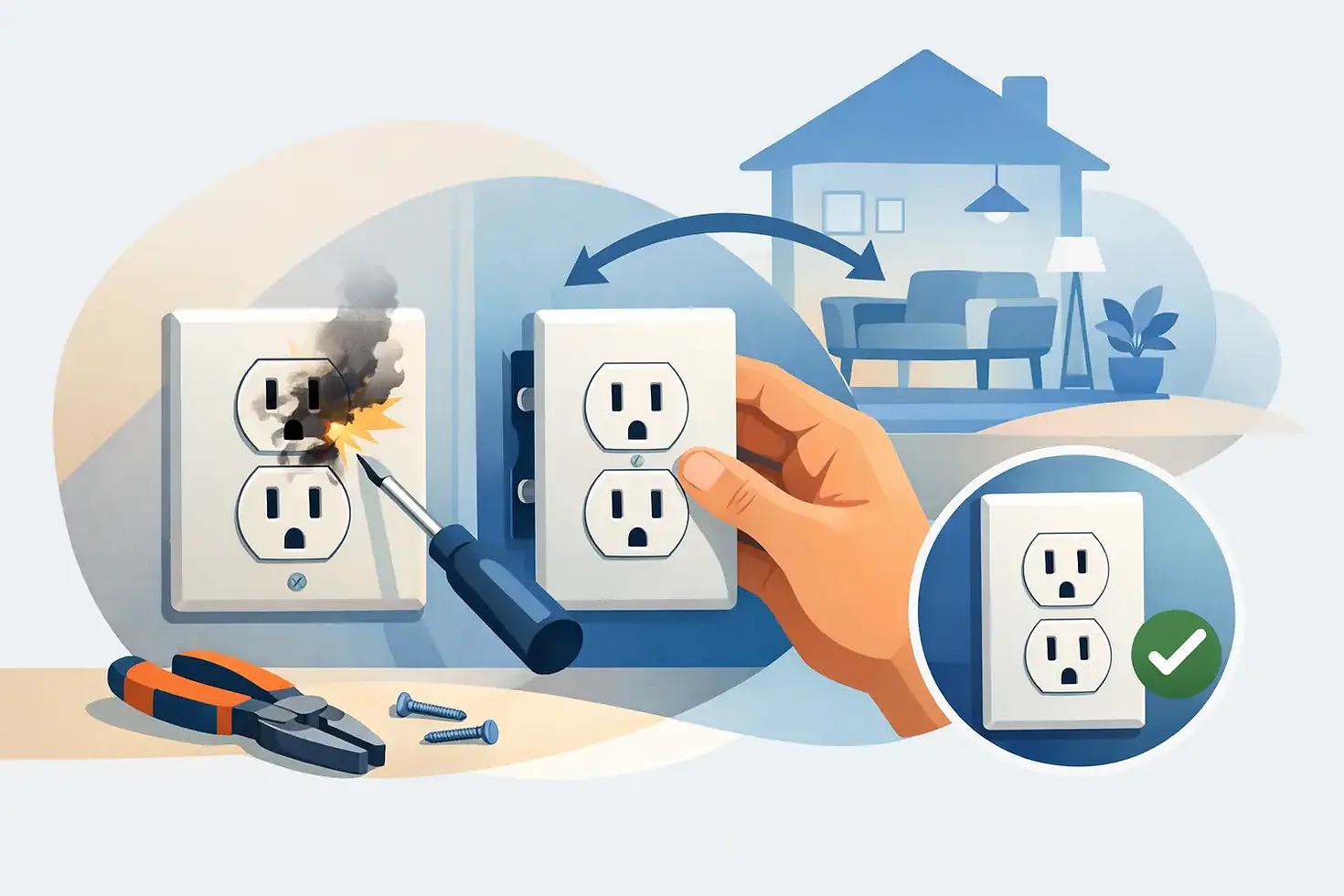
A socket that feels loose, looks scorched or makes a faint crackling sound is not a job to put off until next month. Customers often ask, “when should sockets be replaced?” The short answer is: replace them when there is any sign of damage, overheating, poor connection or they no longer suit the safe use of the room.
A socket faceplate may be a small part of your electrical installation, but it is used every day. Plugs are pulled in and out, furniture catches cables, and older accessories gradually wear. Most replacements are straightforward for a qualified electrician, but the warning signs behind them can sometimes point to a larger fault that needs checked properly.
Signs a socket should be replaced
A cracked, chipped or broken faceplate should be changed. Apart from looking untidy, damage can expose live parts or allow fingers, dust and moisture closer to the wiring than they should be. This is particularly relevant in homes with young children, pets, or sockets placed low down behind furniture.
A socket that is loose on the wall also needs attention. The screws may simply have worked loose, but a socket that moves when you insert a plug can strain the cables behind it. If the fixing box is damaged, the cable is loose, or the terminals have been affected by heat, replacing the front plate alone may not solve the issue.
Discolouration is another clear warning. Brown marks, melting, yellowing around one outlet, or a hot plastic smell can all indicate overheating. Turn off the relevant circuit at the consumer unit if it is safe to do so, stop using the socket, and arrange for an electrician to inspect it. Do not cover scorch marks with furniture or assume the problem has gone away because the socket still works.
Sparking is worth treating with care. A very small, brief blue spark as a plug is inserted can happen occasionally, especially when an appliance is already switched on. Repeated sparking, a large flash, crackling, buzzing or a socket that feels warm is different. These can be signs of a poor connection, worn contacts, overload or a fault with the appliance itself.
Other signs that call for an inspection include plugs falling out easily, switches that stick, intermittent power, or a socket that trips the circuit when a known working appliance is connected. The problem could be the socket, the cable, the circuit, or the appliance. Proper fault finding avoids replacing parts unnecessarily.
When should sockets be replaced for safety?
There is no fixed rule saying every socket must be replaced after a certain number of years. A well-fitted, undamaged socket can remain serviceable for a long time. Condition matters far more than age.
That said, older homes may have accessories that are tired, poorly fitted or no longer appropriate for modern use. Homes now run televisions, broadband equipment, chargers, kitchen appliances and home-office kit from far more outlets than they did years ago. Constant reliance on multi-way adaptors and extension leads can place extra strain on a small number of sockets.
Replacing sockets can be sensible during a rewire, consumer unit upgrade, kitchen refurbishment or redecorating work. It is often more cost-effective to update worn accessories while an electrician is already working on the circuit. New sockets can also provide practical improvements, such as switched outlets in useful places or USB charging points where they genuinely reduce charger clutter.
However, a new faceplate does not make an old electrical installation safe on its own. If you have concerns about aged wiring, frequent tripping, a consumer unit with no modern RCD protection, or sockets that are not properly earthed, the wider installation needs assessed. An electrician can advise whether a repair, targeted upgrade, Electrical Installation Condition Report, or more extensive work is the right route.
Kitchens, bathrooms and outdoor areas need extra care
Sockets in kitchens can suffer from heat, steam, grease and heavy appliance use. A socket behind a washing machine, dishwasher or fridge is easy to forget about, yet its cable and connections may be disturbed whenever the appliance is moved. If an outlet looks marked, feels warm or has been exposed to a leak, have it checked before using it again.
Bathrooms have strict rules because of the risk from water. Standard plug sockets are generally not suitable within a bathroom, apart from specific permitted shaver supply units. If you need power for lighting, an extractor fan, underfloor heating or other equipment in a bathroom, it should be planned and installed correctly rather than extended from an unsuitable socket.
Outdoor sockets need weather-resistant fittings and suitable protection. A cracked cover, water inside the enclosure, corrosion, or a socket that trips after rain is a reason to stop using it. Garden tools, decking lights, pond equipment and EV charging all deserve the right electrical setup, not an indoor extension lead run through a window.
A replacement may not be the whole answer
It is tempting to assume a faulty outlet only needs a new socket front. Sometimes that is exactly the case. But if there are heat marks, repeated tripping or signs of damaged wiring, the electrician should test the circuit and inspect the connections behind it.
For example, a socket that stops working may have a loose terminal somewhere else on the circuit. Replacing the visible accessory could leave the real problem untouched. Equally, an overloaded extension lead can cause heat at a perfectly good socket. The useful solution may be adding more outlets in the right locations rather than repeatedly replacing one overworked point.
This is also why fitting sockets is not a suitable DIY task unless you are competent to carry out the work safely and test it properly. Electricity can look simple at the wall but the connections behind it must be secure, correctly identified and verified. A qualified electrician can isolate the circuit, inspect the wiring, replace the accessory where appropriate, and test that the work is safe when complete.
What about landlords and rental properties?
Landlords have a duty to keep the electrical installation in a safe condition. A damaged socket reported by a tenant should be dealt with promptly, particularly where there is cracking, burning, looseness or loss of power. Waiting until the next routine visit is not a sensible approach where there may be a risk of electric shock or fire.
An EICR helps identify issues with the fixed electrical installation, including concerns with accessories, earthing, circuit protection and deterioration. It does not remove the need to respond to day-to-day faults, but it gives landlords a useful picture of what needs repaired or upgraded to keep a property tenant-ready.
It is also worth reminding tenants not to overload adaptors or use damaged chargers and leads. A socket fault can sometimes be caused or made worse by an appliance plug that is damaged, loose or overheating.
Choosing the right replacement socket
Most homes use standard white switched double sockets, and there is nothing wrong with keeping it simple. If you are updating several rooms, matching the style can make the finish neater. Metal finishes, black accessories and USB sockets are available, but appearance should come after suitability and quality.
USB sockets can be handy beside beds, in kitchens or at a desk, although they are not always necessary everywhere. Think about how the space is actually used. In some rooms, additional standard sockets will be more useful than a USB outlet. For high-demand appliances, the circuit capacity and arrangement matter more than the style of the faceplate.
A professional electrician can also advise if a particular socket location is poor. Sockets behind radiators, tight against sinks, hidden by fixed units or repeatedly knocked by doors may be better moved as part of a small upgrade.
Get a fault checked before it becomes a bigger job
If a socket is damaged, loose, hot, noisy, discoloured or unreliable, stop using it and arrange an inspection. For homeowners in Glasgow and the surrounding area, David Ronald Electrical can assess the fault, explain what is needed in plain language, and provide a free quote before work begins.
A small socket repair is often quick to put right. Acting early gives you the best chance of keeping it that way, before a worn accessory turns into damaged wiring, a tripping circuit or an avoidable disruption at home.


Comments