

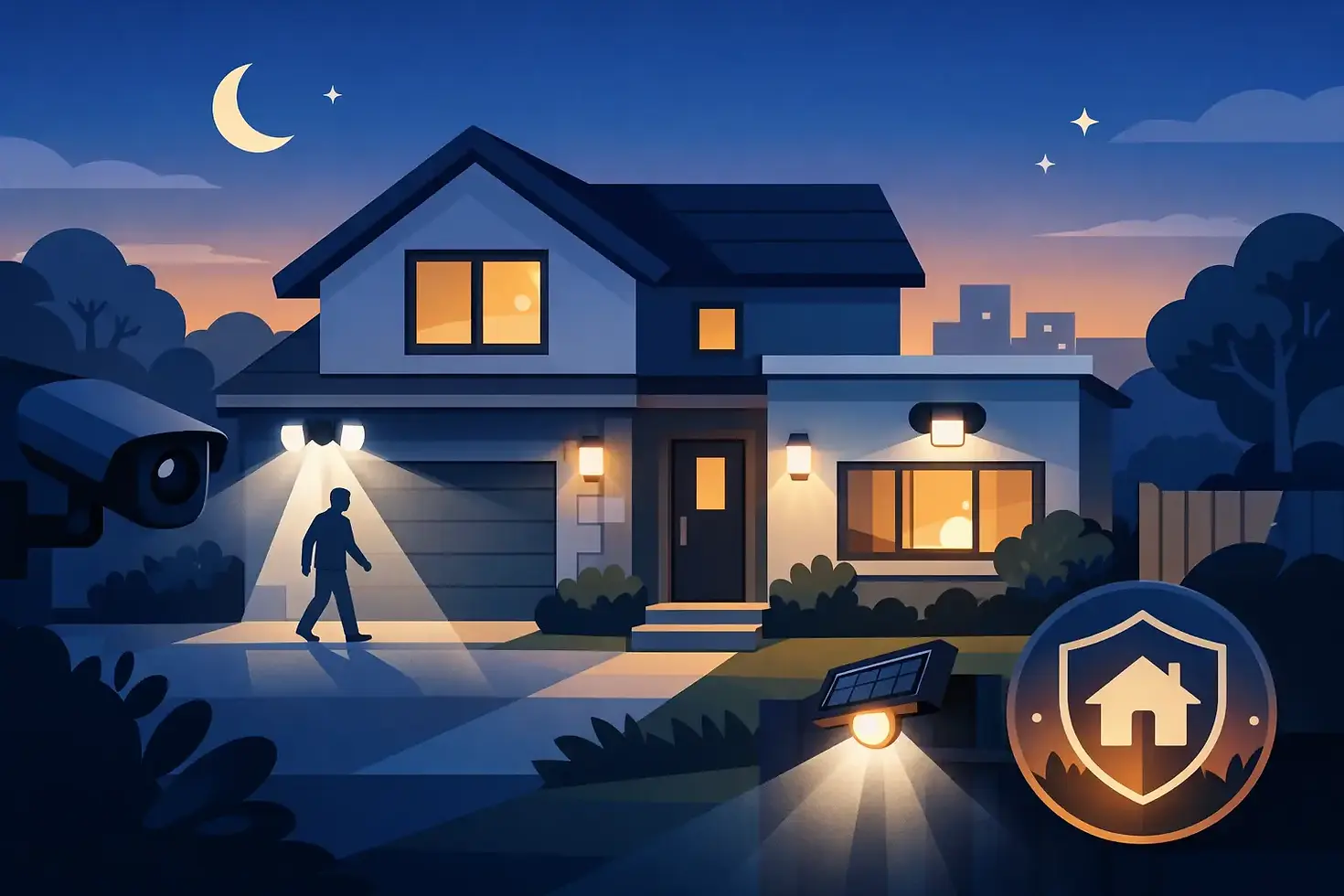
Best Outdoor Security Lights for Safer Homes
- davron22
- May 25
- 6 min read
A light over the back door sounds simple until it flashes on every time a cat crosses the garden, annoys the neighbours, or leaves half the driveway in shadow. Choosing the best outdoor security lights is not really about buying the brightest fitting on the shelf. It is about getting the right light in the right place, so your home feels safer and works properly day to day.
For most households, security lighting needs to do three jobs at once. It should help deter unwanted visitors, make it easier for you to move around outside safely, and avoid turning your front or rear elevation into a floodlit car park. That balance matters more than most people think.
What makes the best outdoor security lights?
The best outdoor security lights are reliable, bright enough for the area they cover, and suited to where they are being fitted. That sounds obvious, but a lot of problems come from choosing a fitting based on wattage or appearance alone.
A small side path does not need the same output as a long driveway. A sheltered porch has different requirements from an exposed gable wall. If you pick a unit that is too powerful, too sensitive, or poorly positioned, it can become more of a nuisance than a benefit.
In most homes, LED fittings are the sensible choice. They use less power, last well, and come on at full brightness straight away. They also give you far more choice in terms of beam spread, colour temperature, PIR sensor settings, and overall design. Halogen security lights still exist, but in domestic settings they are usually harder to justify now unless you are replacing like for like for a very specific reason.
PIR, dusk to dawn, or switched lights?
This is where it depends on how you use the space.
PIR sensor lights are the most common option for domestic security lighting. These switch on when movement is detected, which makes them a good fit for front doors, side entries, gardens, garages, and driveways. They are practical because the light is only on when needed, and the sudden activation can help draw attention to movement outside.
That said, PIR lights need to be set up properly. Poorly adjusted sensors can be triggered by passing traffic, wind-blown branches, pets, or people walking past on the pavement. A decent fitting with adjustable sensitivity, range, and timer settings is usually worth paying for.
Dusk to dawn lights come on automatically when natural light fades and switch off in the morning. These work well where you want consistent low-level visibility rather than sudden bursts of bright light. They can be useful near entrances, communal areas, or rental properties where reliable visibility is more important than motion detection alone.
A manually switched outdoor light still has its place too, especially in gardens, patios, and decked areas where the light is used for convenience as much as security. In some cases, the best setup is a combination - for example, a softer dusk to dawn light near the entrance and a PIR floodlight covering the side access.
Where security lights make the biggest difference
The front door is usually the first place people think of, and rightly so. A well-placed light at the entrance helps with keys, visitors, deliveries, and general peace of mind. It also improves visibility on camera doorbells and CCTV systems if you have them.
Rear doors are just as important, if not more so. Many break-in attempts happen at the back of a property where there is less visibility from the street. A PIR light covering the patio doors, back step, or garden access can make a noticeable difference.
Side paths and alleys are often overlooked. These narrow areas can stay very dark and are common weak spots around a house. A compact, well-angled fitting here is often more useful than an oversized floodlight at the front.
Driveways and detached garages benefit from wider beam coverage, but brightness should be controlled carefully. You want enough light to see movement, park safely, and access the property, without shining directly into windows or dazzling anyone using the path.
Brightness matters, but more is not always better
A lot of people assume the best outdoor security lights are simply the brightest ones available. In practice, brightness needs to match the space.
For a small porch or doorway, a modest LED fitting is usually plenty. For a larger rear garden or driveway, you may need a higher output light or more than one fitting positioned strategically. One light trying to cover everything often creates dark patches and glare at the same time.
Beam angle is just as important as brightness. A wide beam is useful for broad coverage, while a narrower beam can work better in long side passages or focused access areas. Colour temperature matters too. A very cool white light can feel harsh, while a neutral white often gives a clearer, more usable result around domestic properties.
If you are trying to improve security without making the house look industrial, the fitting style and beam control matter more than headline power figures.
Weather rating and build quality
Outdoor lights need to cope with Scottish weather, not just look tidy on the day they are fitted. Rain, wind, cold, and general exposure all take their toll over time.
Look for fittings with a suitable IP rating for outdoor use, along with solid construction and decent seals. Cheaper units can let in moisture, mist up, or fail early, especially in exposed positions. A low-cost fitting can end up being more expensive if it needs replaced after a short time.
This is one reason supply and fit can be helpful. It gives you a chance to get advice on what will actually last in the position you have in mind, rather than guessing from product packaging.
Good installation is half the job
Even the best fitting will not perform properly if it is badly sited. Height, angle, cable route, detection zone, and surrounding obstacles all affect how useful the light will be.
A common mistake is mounting a PIR too high, which reduces detection where you actually need it. Another is pointing a floodlight too low, which creates glare and leaves the wider area darker than expected. Trees, fences, gates, bins, and walls can all interfere with how a sensor behaves.
There is also the electrical side to consider. Outdoor lighting should be installed safely, with suitable fittings, connections, and protection for the environment it is in. If you are adding new exterior lighting rather than swapping an existing fitting, it usually makes sense to get it done properly from the start.
For homeowners and landlords, that means fewer call-backs, fewer faults, and a result that actually solves the problem.
Best outdoor security lights for different homes
A small terraced house usually benefits from targeted lighting rather than large floodlights. One neat PIR at the front entrance and another covering the rear access is often enough. The aim is practical coverage without upsetting neighbours or lighting the whole street.
For semi-detached and detached homes, side access and rear gardens become more important. These properties often need a bit more planning, especially if there are multiple entry points or larger outdoor areas.
Landlords usually need reliability and simplicity above all else. A tenant should not have to guess how the light works or report constant nuisance triggering. In rental settings, straightforward fittings with sensible sensor settings tend to be the better long-term option.
If the property already has soffit lighting, decking lights, or decorative exterior lights, security lighting can often be added without making the outside of the house look cluttered. The best result is usually one where the fittings work together rather than competing with each other.
A few mistakes worth avoiding
Buying purely on price is the obvious one. Cheap fittings can be tempting, but poor sensors and weak build quality are common complaints.
Another mistake is relying on one light to do everything. It is often better to use two smaller, well-positioned lights than one oversized fitting blasting across the whole property.
Finally, do not ignore neighbour impact. A bright light aimed into the next garden or bedroom window creates problems quickly. Security lighting should make your property safer, not start arguments over the fence.
If you are not sure what suits your home, a quick look at the layout usually tells you more than any product description. At David Ronald Electrical, that is often what people need most - simple advice, a sensible recommendation, and a tidy installation that does the job without fuss.
The right outdoor security light should feel like part of the house, not a workaround for poor visibility. When it is chosen well and fitted properly, you stop thinking about it - and that is usually the sign you got it right.


Comments